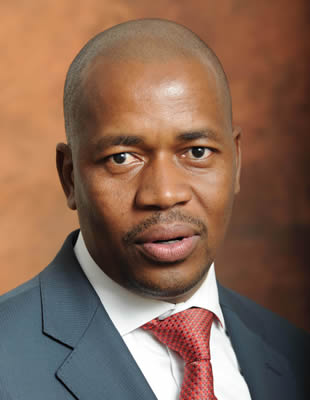

“The year 2017 marks 100 years since the birth of the one outstanding patriot and architect of the modern South African nation, the late ANC president, Oliver Reginald Tambo,” said the mayor.
“This is therefore the year of the centenary commemoration and celebration of the life of this outstanding son and leader of the struggling people of South Africa.
“In that context, this year will offer us the opportunity to reflect on the legacy of former president OR Tambo and practically engage with the values that he espoused in his life.
“This is particularly relevant to us, since the City of Ekurhuleni long adopted OR Tambo as a figure who inspires its ethical values and humanitarian approach to development and service delivery,” Masina said.
According to Masina, the main thesis of this philosophy is to consistently prioritise the needs of the most under-developed section of the municipality in the strategic framework and delivery plans of the City’s administration.
“It’s imperative that the City plays a leading role in ensuring community participation in commemorations and initiate sustainable programmes which will encapsulate Oliver Reginald Tambo’s legacy.
“The municipality will work closely with national government in honouring this iconic revolutionary giant, in a way befitting of the life he lived.
“As the City we now know that only 15 per cent of the population in Ekurhuleni has post-matric qualifications, while four per cent have no schooling at all. To exacerbate this situation, we have a staggering 119 informal settlements accommodating not less than 600 000 people,” Masina said.
Masina said the problem of informal settlements is primarily a historical product of the apartheid structures of urban settlement planning.
It is a manifestation of the crisis of the social and economic engineering that produced black townships on the periphery of the industrial cities.
They were conceived and built as concentration camps for cheap black labour to sustain the demands of the apartheid industrial economy.
“The municipality has recently taken upon itself urban regeneration with the primary aim of developing an integrated, effective system which doesn’t work in fragmentation.
“We have a mammoth task of consolidating all nine towns which seamlessly provide effective service delivery for the entire region.
“Urban regeneration must address disparities between our township communities and towns.
“Further to this, as a City striving towards a global city region, infrastructure development remains paramount towards realising this objective. The recent flash floods were a harsh reminder of many challenges that lie ahead and the urgent upgrades that are needed in our infrastructure.”
He said he was proud that the bursary scheme continues to benefit many young learners of Ekurhuleni, and its increase can only broaden access for future generations who lead our society.
“As a long-term sustainable strategy to achieve this kind of economic and social development, we need to re-imagine Ekurhuleni as the site of a post-apartheid city. This partly relates to redesigning the spatial profile of the region so that we transcend apartheid planning that kept our region only as a labour concentration camp for limited minimal jobs without diverse economic growth opportunities.
“Attached to this is also our campaign to have a university in our metro that will serve as a fountain from which we draw the skills and resources to serve as the human capital that will drive this development of our city. We have so far extended our funding for academically qualifying students to go to Universities and FET colleges in different areas as part of this human resource development strategy.
“However, to aggressively produce the skills and human capital required to drive development, we need to work tirelessly to build tertiary institutions locally. A university would serve as the rallying point for this work and can assist in improving the resource base of our existing colleges,” Masina said.
According to Masina, despite many challenges, there are also positives, such as the Bus Rapid Transport system that is fast becoming a reality.
“I’m pleased to announce that testing will start in the first week of February and procurement has been concluded for the second phase.
“This system is one of many ways of ensuring seamless service delivery, addressing historical disparities which divided towns and townships.”