More people are likely to buy secondhand rather than new vehicles
With the Rand deprecating against leading world currencies and with the hike in the interest rate, more people will be looking to buy a secondhand vehicle instead of a brand new model.
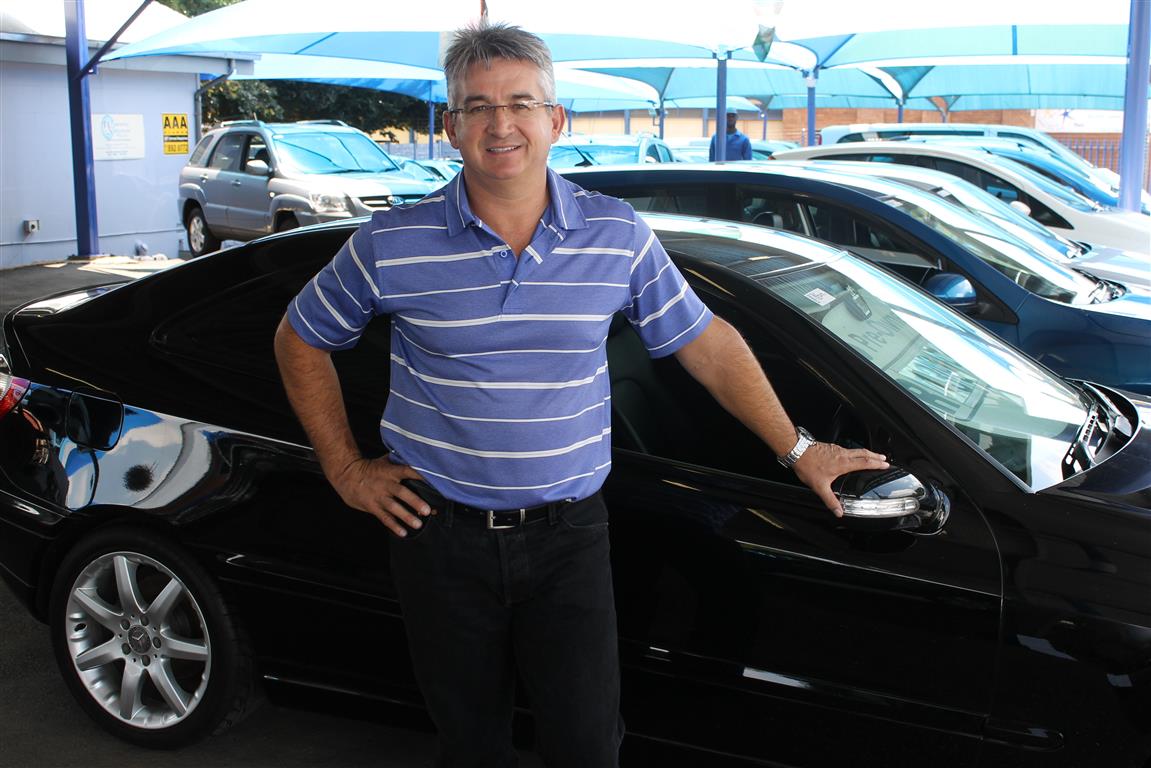

This is according to Wilfred Alexander, owner of Signature Motors, in North Rand Road.
He said that, at the moment, you will most likely find in the motor industry that two secondhand vehicles are being sold for every new vehicle.
“If you, however, look at the trend over the last couple of decades, you will see there is a constant fluctuation, where one year new vehicles sell better and then the next year it will be the turn of secondhand motors,” said Alexander.
“This is but a sign of our volatile economic market.”
Alexander said that apart from the Rand being so weak and the interest rate spiking, potential buyers are also finding it tougher to buy, due to the stringent requirements of banks as a result of the National Credit Act.
“Banks are making sure it is not so easy to buy on credit, especially when it comes to motor vehicles,” he explained.
“They look at your disposable income before granting financial assistance. This is income you have left following all your deductions.
“This means you can be approved for finance if you only earn around R4 000, but then your other expenses need to be very low.
”This, therefore also means that someone who earns R30 000 a month will not be automatically approved. If you have very little disposable income you will find it tough going.”Alexander reckons the National Credit Act has placed greater pressure on dealerships to make a living.
However, he pointed out that it is not all gloom and doom, as clearly there are still people with money to spend.
“For example, around 20 per cent or so of my sales are cash – and I don’t stock cheap vehicles.
“Also consider that we find the middle class still has a lot of buying power, looking to buy secondhand vehicles of between R70 000 to a R150 000.
“Sure, you get to purchase a brand new vehicle for around R130 000, but then you are looking at your smallest engine capacity vehicles.”
Regarding the types of vehicles being sold, Alexander said small vehicles are definitely the trend.
“It is, after all, about fuel consumption. You don’t get a lot of people coming in looking for your big fancy cars anymore.
“We have also found many times that families are looking to buy a small vehicle and then also something more substantial, like a SUV, for the family trips.”
Alexander said that, with the difficult times, it is not so easy to get stock on the floor as people are tending to hold onto vehicles for longer.
“Also, consider, these days you can buy a vehicle on a 72-month payment plan, compared to the 60-month payment plan of yesteryear. This means a lot more vehicles are out of the secondhand market for longer.”
With Boksburg being well-known for being a city that thrives due to the motor sales industry, Alexander believes the latest tough times will most likely separate the more reputable dealers from less reputable ones.
“Don’t be surprised if you see a lot of dealerships closing down in the next five years. Fact remains, these days people are very well informed when it comes to products, to prices, and they are very sensitive to the kilometres on the clock.
“You cannot, therefore, fool a client. They know quality and they know market-related prices.
“If you offer poor products or products at a price not market-related, you will build up a negative reputation that can backfire on you.
“This industry is, after all, about reputation and, in the tough economic times, customers will be looking to buy from reputable dealerships.”
He also warned that, while it is more expensive to buy from dealerships, it is still safer, as buying privately holds numerous pitfalls.
“One will be surprised at how many of the vehicles that are being sold to the public are stolen,” he said.
”So often when you buy privately, you hardly know the history of the vehicle.
“Once you buy it, you are then in trouble because you are held solely responsible. With a dealership, we take the hit if it turns up something is wrong with the vehicle, such as the engine being stolen.”
Alexander also warned against constantly trading in vehicles.
“We live a car-mad society. People tend to buy with their heart and not with their head.
“Problem is, you will keep on losing if you continue to trade in. What often happens is that the deficit you owe on the car you are trading in is then loaded onto the vehicle you are buying.
“Therefore, the purchased vehicle is now bought at much higher price and you will, therefore, lose tremendously on the next trade-in. It’s a vicious circle that one needs to be aware of.
“It is the simple reality that any car, be it new or secondhand, loses its value quickly, so one needs to buy smart.”
Alexander, however, still sees a bright future for car dealerships, especially since the car remains the number one mode of transport in South Africa.