Hospital in Vosloorus lends support for Madiba Day
Celebrating Mandela Month, Clinix Botshelong-Empilweni Private Hospital, in Vosloorus, offered free treatment to gastroscopy and hernia patients as a way of giving back to the community.

Clinix Health Group has hosted Clinix Open Days at all its acute hospital facilities during the month of July, to perform a minimum of 67 procedures as part of the Mandela Day celebrations.
According to Thoko Masondo, the hospital marketing manager, the open days offered patients theatre and ward capacity to have their procedures done.
A total of 14 patients underwent gastroscopy and hernia procedures.
Seven gastroscopy patients were treated on Friday, July 21, while seven hernia patients were treated on Tuesday, July 25.
“This project is in partnership with our specialists, general practitioners, public hospitals, radiology services and Clinix Health Group staff. The 14 beneficiaries we selected were transferred from various clinics in Ekurhuleni to the Thelle Mogoerane Hospital, in Vosloorus. All these beneficiaries were still on the waiting list,” Masondo said.
Treating all 14 patients will cost the hospital over R1.3-million.
Dr Winsloou Michalski and Dr Benjamin Domfe, at Clinix Botshelong-Empilweni Private Hospital, performed gastroscopy procedures on seven patients on July 21.
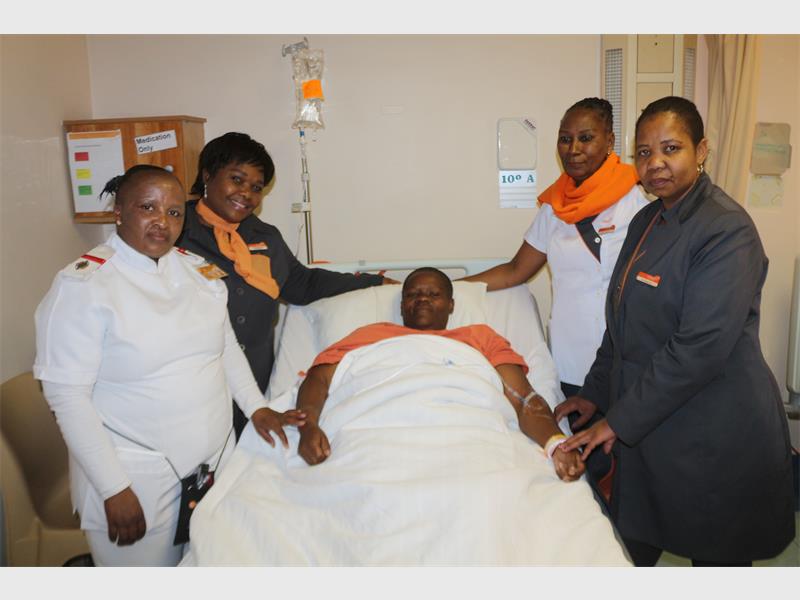
One of the beneficiaries was Tholakele Nkabinde, from Villa Liza.
Nkabinde shared her excitement at being chosen as one of the beneficiaries.
“I thank the Lord for opening doors so the hospital can help me. Since the procedure I’m doing well and my life is back to normal,” Nkabinde said.
What you need to know about a gastroscopy:
A gastroscopy is a procedure where an endoscope, a thin tube with a light and camera at the end, is used to look within the oesophagus (gullet), stomach and the first part of the small intestine (also known as the duodenum).
The gastroscopy is used to search for problems, diagnose them and treat conditions such as bleeding ulcers.
The procedure takes about 15 minutes, depending on whether it’s being used to treat a condition.
The surgeon begins by numbing the patient’s throat with a local anaesthetic spray or sedative, depending on what the patient prefers.
The endoscope is placed in the back of the patient’s mouth and the first part of the tube is swallowed.
The tube is then guided down the oesophagus and into the stomach.
Serious problems during the procedure are rare. Patients may find it uncomfortable at first to swallow the endoscope but this should pass as it is moved further down.