
Prices this year for school uniforms have remained expensive.
Last year, February 1, school uniform prices increased by 15 per cent on most items, which set the ball rolling for parents to have to dig deep to send their children to school.
Stores in Boksburg have seen a major drop in sales due to the high cost of school uniforms.
According to Faruk Loonat from Civic Outfitters and Sportswear, school uniforms remain very expensive but they have tried to reduce the prices a little bit to make it affordable to everyone, but customers still feel that the prices are too high.
“We even came up with a special deal by keeping the prices the same as last year,” Loonat said.
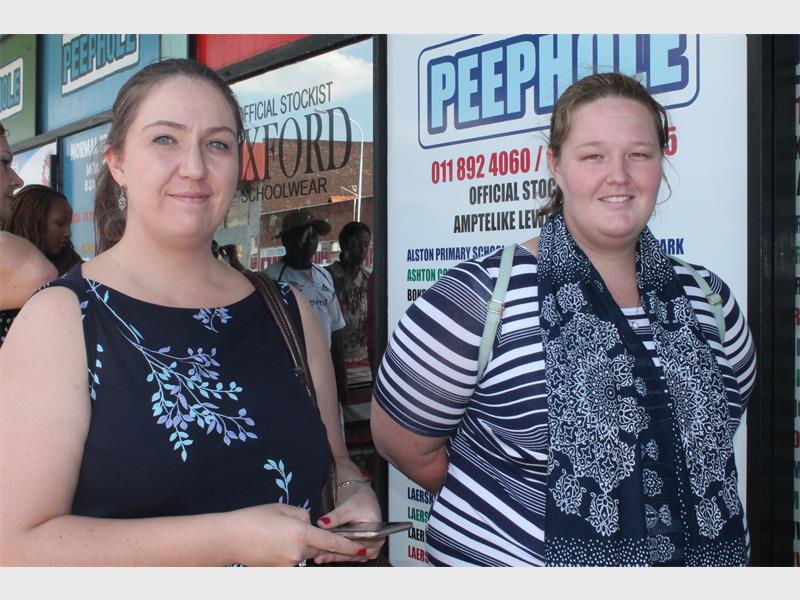
Shabier Laher from Peephole said the prices are still stable and compare well to last year.
“Uniforms are pricey, and to think that we have no choice but to buy school uniforms is sad. I think the limited number of suppliers in Boksburg contributes to the high prices we have to pay, because we have no other outlets where we can source clothing,” said grandfather Albert Links from Reiger Park.
Melanie Maritz, whose child is still in primary school, said: “Our children grow up so quickly and it tends to be a problem having to keep on buying clothes.
“The prices for school uniforms are ridiculous and then there are other costs involved, like school fees, school trips and stationery.
“We as parents face tremendous challenges to keep on buying in order for our children to attend school.”
Another parent proposed a standard uniform for all schools, such as a white T-shirt and black trousers or grey skirt.
Laher said they acknowledge that people don’t have money especially with the rising unemployment rate.
“We are therefore involved in numerous initiatives which help us to provide school uniforms to those from disadvantaged backgrounds for free,” Laher said.
Thukelo Futuha said this problem of expensive school uniforms won’t stop until the government steps in.
In the meantime, the Competition Commission has announced plans to get tough on South Africa’s school uniform monopolies, which force parents to pay thousands of Rands for new school kit even though similar items can usually be bought elsewhere at a fraction of the cost.
According to Sipho Ngwema from the Competition Commission, they have received more than a dozen complaints since 2010.

The Commission has endeavoured to be understanding and accommodating to the schools and companies involved.
“We have engaged in protracted advocacy processes with key stakeholders, including the various education departments, the governing body structures, principals and schools. We did this to assist schools to change behaviour and comply with the law.
“Our approach to enforcement is very dynamic. It encompasses extensive advocacy and collaborative efforts in order to encourage behavioural change.
“We have to make sure that we move along together and help schools do the right thing. We expect the law to be obeyed and schools to stop this conduct,” Ngwema said.
The Commission requests parents to report schools that force parents to buy from a specific supplier.