BUDGET: Millions to be spent on urbanising, industrialising metro
The Ekurhuleni capital budget for the 2016/17 financial year stands at R5.1-billion, while the operational budget for the same period is R34.2-b.

Dig deep into your pocket to pay for hike in tariffs
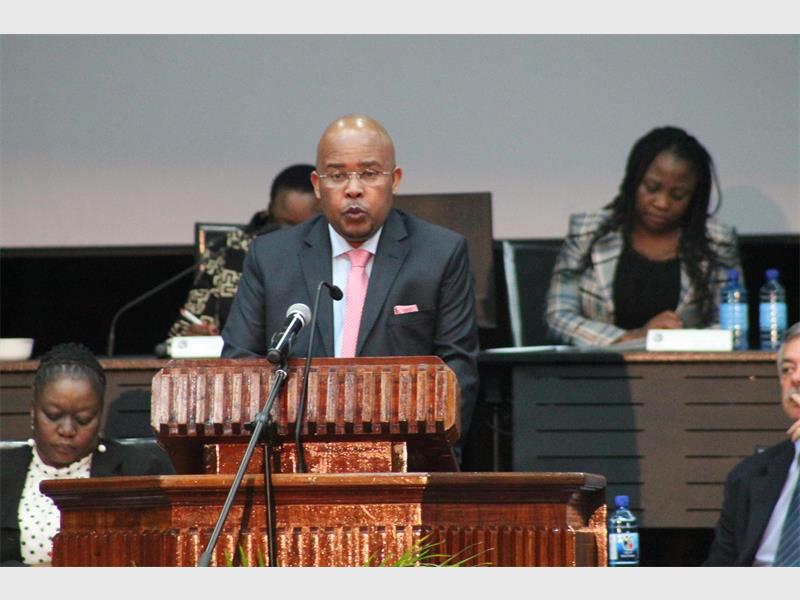
This was announced by Ekurhuleni Finance MMC Moses Makwakwa, who delivered his budget speech in Alberton, on April 28.
The capital budget has been allocated as follows:
* Outlining the Medium Term Revenue and Expenditure Framework (MTREF), based on the economic functional corridors, Makwakwa said an amount of R141-m (R550-m for MTREF) has been allocated to re-industrialise the city.
This will cover, among others, R88-m to strengthen industrial competitiveness through the development of the aerotropolis nerve centre, investor information centre and Ekurhuleni innovation hub.
* A total of R19-m has been allocated to acquire tourism route buses, high-tech tourism management systems and developing waterfront facilities, which include conference and hospitality facilities at Germiston Lake, while R15-m will be used to develop an enterprise hub in Reiger Park and vocational skills centre in Ramaphosa, to promote small, medium enterprises.
* To re-industrialise corridors, R211-m has been set aside (R461-m for MTREF) in order to drive economic development.
* For the installation of bulk infrastructure, to enable new development, R100-m is budgeted.
Makwakwa added that key developments in this corridor include the Tambo Springs Inland Port and Prasa manufacturing plant in Nigel.
* A figure of R33-m has been allocated to sustain agricultural activities, which include R15-m for the development of part of the Spaarwater farm into a commercialised eco-tourism facility, training academy, lodge and game farm, and R18-m to expand the wholesale market at the Fresh Produce Market.
* An amount of R78-m goes towards promoting township economies through tourism and industrial development.
*To re-urbanise the city, in order to achieve sustainable urban integration, at total of R3.2-b (R10.9-b for MTREF) has been allocated.
* When it comes to repairs and maintenance in re-urbanising the city, Makwakwa set aside a total of R2.9-b, amounting to 6,3 per cent of the carrying value of the assets.
This amount has been allocated for repairs and maintenance of, among others, the energy repairs and maintenance (11 per cent of the asset value), the water and sanitation repairs and maintenance (8 per cent of the asset value); and the roads and storm water infrastructure (3 per cent of the asset value).
*Over and above this, Makwakwa allocated an additional R200-m in the capital budget for the reconstruction of the roads and storm water system.
* He said that, to re-generate to achieve the environmental well-being of society, R266-m has been allocated to ensure an environmentally friendly city and that, in creating a socially cohesive environment, they will upgrade and develop parks in Springs, Etwatwa, Tembisa, KwaThema, Benoni, Zonkezizwe and Vosloorus.
* Furthermore, an amount of R507-m (R1.5-b for MTREF) has been allocated for the construction and upgrading of community facilities and the acquisition of emergency services vehicles, the purpose of which Makwakwa said was “re-mobilising in order to build a responsive and active citizenry”.
* In order to achieve effective co-operative governance, Makwakwa allocated R607-m (R1.9-b in MTREF) towards building a capable developmental and sustainable city. This amount sees R305-m go towards digitising and modernising the city, R250-m for the upgrading of municipal properties and the acquisition of land and buildings to bring the government closer to the people.
* Regarding the Social Package, Makwakwa said that in expanding access to free basic services, they have spent R10-b since 2011 towards the social package programme as a relief to households, while they continue providing water and ablution services to 119 informal settlements.
The social package includes:
• 100 per cent rebate on assessment rates
• Free 9 kilolitres of water
• Free 9 kilolitres of sanitation
• Free refuse removal; and
• 100 kilowatts of free basic electricity.