Government take note, basic needs not met!
According to the Maslow Hierarchy of Needs, humans on their way to a stage of self-actualisation, desire for certain psychological needs to be met, such as having access to water, food and warmth.

And then, once these needs have been negotiated, humans then need to feel safe before focussing on other needs such as companionship (family), and striving for personal goals in order to gain self-confidence and self-fulfillment.
In South Africa the hierarchy of needs clearly does not function in any way, shape or form! No wonder people are stressed out, unhappy and struggling to remain content. No wonder people are emigrating to where their needs are met!
Here in Gauteng where you think we are a sort of advanced society, there is a lack of assurance when it comes to water or power.
At first we had continuous power outages in Boksburg, so there goes our ability to stay warm and make food.
Eskom keeps informing the public it needs a lot more money in order to keep the lights on, so this means definite future price hikes without the assurance that we are safe from the city in future being dumped in continuous darkness.
As part of the government’s long-term strategy to deal with the ever-growing demand for power, South Africa is supposedly in talks with Russia over the procurement of nuclear reactors. It is reported this is a R500-billion deal.
If this deal goes through, one can only guess who will foot such an enormous bill.
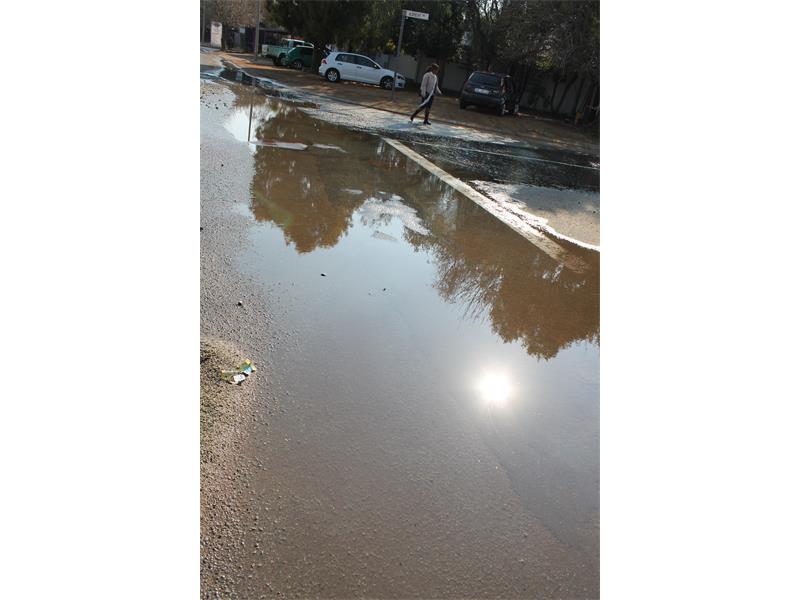
Along with power outages, we’ve had constant water leakages. All over the city, water is being wasted, yet it appears that there is no real clarity on why infrastructure keeps on failing at an alarming rate.
And now, to top it all, Gauteng has been hit with a massive water crisis, because of a ‘so-called’ perfect storm of cable thefts, blown transformers, stationary pumps and poorly-maintained infrastructure, which has highlighted the vulnerability of Gauteng’s water and electricity supply network.
Without a proper network, the entire economy will grind to a standstill.
It is no wonder the DA has called on Gauteng Premier David Makhura to launch a commission of enquiry into factors causing the water supply crisis in large parts of the province.
What is of course worrying, as with the power outages, is the lack of accountability.
While residents endure days without water and, at times, electricity, local municipalities, metros, Eskom and Rand Water have refused to accept responsibility.
The DA has also questioned the complete lack of backup systems and contingency plans which increases the province’s vulnerability, and the reasons why none have been implemented, nor put in place, which require investigation.
Gauteng is the largest economy in South Africa and the fourth largest in Africa, yet we might as well revert back to gas and go camp near a river.
So much for our basic needs being met!
How about meeting our safety and security needs? What a joke! But I am not laughing.
The recent crime statistics have proven that South Africa continues to slide down the scale of anarchy and lawlessness. Here in Boksburg it is clear that crime is out of control, especially the drug trade.
Reiger Park is the poster child of what happens when a society is dumped into a cauldron of fear and chaos – out of such darkness children become victims.
And then, to top it all, the Post Office cannot even get their act together to ensure people receive their mail. Seriously, how difficult can it be to sort out this mess?
Is it not amazing that in a country like South Africa, and in a province like Gauteng, people live in constant doubt over waking up having access to water, electricity, and post. Again, we would rather not talk about our lack of safety.
It is no wonder Gauteng (according to the DA) has experienced around 229 illegal protests this year, with 131 being protests directly related to service delivery.
People are not happy, because their hierarchy of needs are not being met.
So far so good when it comes to Ebola in SA, but judging at how our so-called ‘developed’ country struggles to provide basic services, then we might as well sigh with relief that we are not facing a pandemic crisis.
After all, if we struggle to even resolve a postal strike or a lack of water supply, how are we going to stop Ebola, which is a beast of a different nature than Aids.
Let our government take note that while its citizens go to bed at night, they do not feel safe, warm or content, because they have to worry who is stealing cables, what sub-station might pack up, what water pump might stop working, and who is climbing through their window.
Maybe it is a good time to book a spot at Nkandla – most likely all is fine in that part of the world where the Public Protector is not allowed to tread.