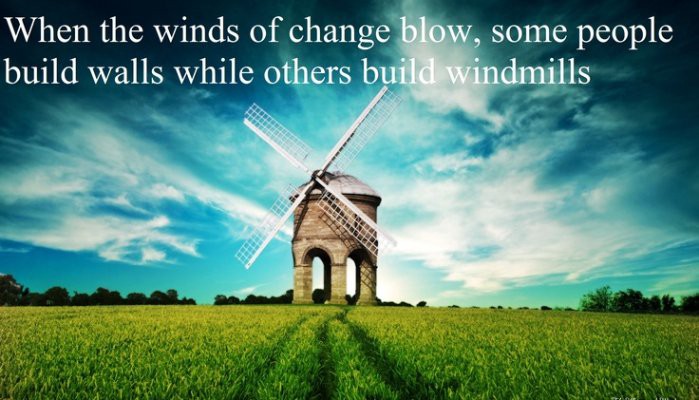

2018 has so far proven to be a most interesting year, and one gets the warm and fuzzy feeling, which can be mistaken for dread and foreboding, that the winds of change have just started to blow.
Of course, we do not know what shape or form or texture the winds of change will take, and whether they will bring favour, fortune, dread or maybe even great disaster.
On February 3, 1960, Harold Macmillan, the British prime minister said the following to South Africa’s Parliament:

This famous speech was a turning point in Britain’s attitude towards its African colonies. Once again, in 2018, we see such winds of change blowing through this land, and yes, whether we like it or not, things are going to change.
After all, we have already seen the rise of VAT to 15 per cent, leaving a lot of Very Angry Taxpayers growing restless, even signing petitions, and there are threats of national strikes.
Remember, the VAT increase is the legacy of a president who faced corruption charges even before he took the highest office.
Unlike 1960, SA is not facing a rise of national consciousness. It is rather facing consciousness of continued strife and division.
- Expropriation
This is evident when a vote in favour of land expropriation without compensation was passed in Parliament. This is one of the thorniest issues to confront the country since the fall of apartheid.
The motion was brought by the radical left Economic Freedom Fighters (EFF) party, and was backed by the ruling African National Congress (ANC) after amendments.
The parliamentary motion could eventually lead to changes to the Constitution over land reform.
Clearly there is very little unity in this country, as many white property owners are still being accused of stealing land, even though none of them were present before the 1900s. And yes, they all paid for the land, so go figure.
Our new president, Cyril Ramaphosa, used his first major speech on February 16 to express his support for expropriation without compensation – as long as it increases food production.
It might be true that much of the most productive land in South Africa is still owned by white people, 24 years after the end of apartheid, but taking land without compensation could lead this country down a rocky path of greater division, violence and volatile relations.
- E-tolls
And then we have Gauteng Premier David Makhura, who said he would engage Ramaphosa on the e-toll matter. Can we hear an amen.
The premier has been advocating for the abolition of the Gauteng Highway Improvement Project (e-tolls) for a while now.
“We all know e-tolls have added to the cost of living for many motorists and public transport users in Gauteng,” the premier said in his 2018 State of the Province address. “The new dawn must also bring a solution to the protracted and unresolved problem of e-tolls. It is clear e-tolls have not worked.”
Is this possibly the final nail in the coffin of e-tolls? Remember, we not only have Very Angry Taxpayers in this country, some of them now fearing losing their land, but also angry non-paying Sanral road users in Gauteng.
By the way, the jury is still out on whether the government’s promise to conduct lifestyle audits will bear fruit, or maybe this is just another ploy to keep the hounds of justice at bay.
- The new cabinet
Finally, let us hope, yes, let us hope beyond all hope that the winds of change have blown in the new-look cabinet (which still needs to be downsized).
We all know there are plenty of question marks behind maintaining former social development minister Bathabile Dlamini, appointing Bheki Cele as minister of police, moving former finance minister Malusi Gigaba back to his old portfolio as home affairs head, and finally appointing Thulas ‘Nkandla’ Nxesi back to public works (remember, it was Nxesi who was at the helm when the Nkandla matter came to the fore).
On a positive note, Chief Justice Mogoeng Mogoeng reminded the new ministers what it is all about during their swearing-in ceremony.
Mogoeng spoke passionately, saying: “Everybody who’s going to be called upon to take an oath or affirmation is required to do so as allegiance to the republic and obedience to the Constitution. If you like, you’ve come to enter into a formal contract with the people of South Africa.”
He also said it is not about assuming power so that one can look important, and that to be a minister is to be a servant of South Africa.
This is after all what it is all about – our government serves the people. And this is what has been lacking for so many years and why the country is falling apart.
Let us just hope the winds of change bring not a cold front of further misery, but let it be a fresh breath of air in a nation still divided because of smouldering prejudices and intolerances.