What has happened to the war on leaks?
As you drive along the R21 towards Boksburg, there is a huge billboard (thankfully non-racial), which declares government's war on leaks.
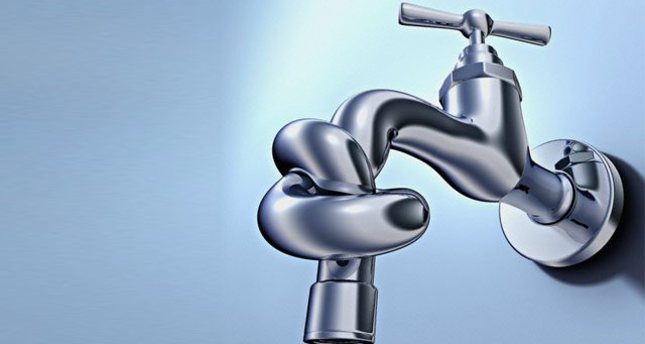

We are, of course, talking about water leaks, not the kind where money leaks away due to corruption.
For those who don’t know, the War on Leaks training programme is the brainchild of the Department of Water and Sanitation, working together with Rand Water as the implementing agent and the Energy and Water SETA as the training entity.
This programme kicked off in September, last year, to proactively challenge and minimise water losses in the country.
After all, it has been reported that water losses result in cost implication in excess of R7-billion.
Consider that a quarter of all national leaks is considered to be a loss through physical leaks.
The plan, apparently, is that within a five-year project life span, 15 000 trainees will be trained within three disciplines to ensure that South Africa’s water and sanitation sector is equipped with a competent arsenal of skills and capacity.
While this all good and well, I fear five years is a long time to get supposedly competent people up and running to address water leaks.
By that time the war we are waging on water leaks will be a war already lost, judging by how weeks and even months pass by before water leaks in Boksburg are repaired.
There is something very unsettling in the fact that, while South Africa experiences one if its worst droughts, right here in Boksburg, month after month, huge water leaks are reported that are allowed to run havoc before action is taken.
That is certainly not winning any war on leaks.
And why it takes so long to fix these leaks remains a mystery, despite trying to get clarity from the metro. Is it incompetency (which the training programme might address), or is simply a matter of complacency?
Whatever the reason, the fact is that thousands of litres of water are going to waste in Boksburg, despite concerned residents reporting leaks religiously.
One of the leaks that comes to mind is the one reported last year, at the ERPM Golf Club. Apparently, after several attempts to fix the problem, it was realised a special clamp was needed (which took more time to obtain).
In the meantime, while time elapsed due to an apparent lack of any urgency, water kept streaming away while, in the rest of the country, cattle were dying.
Granted, I could be wrong about the metro’s efforts to fight the war on leaks, but in 2016 we again sit with numerous reports of water leaks that are simply not being attended to quickly and in a competent matter.
We even hear of contractors who visit a specific site on numerous occasions, without any progress.
Sure, one can understand that a water leak might, at times, be challenging to fix, but there is no excuse for any water to run for a week, never mind months, on end.
And what has happened to Ekurhuleni’s rapid response team?
For those who can recall, towards the end of 2014, the metro unveiled six single cab bakkies which were to be used to curb water losses by speedily attending to burst and leaking pipes in the region.
At the time, Ekurhuleni spokesperson Themba Gadebe said the rapid response teams would ensure complaints were attended to within the standard response time of 48 hours — to reduce water wastage.
“An increase in water loss has been a major challenge within the city for the past few years and this initiative will address this, as well as helping to reduce the risk of damage to private property and infrastructure,” said Gadebe during the launch of the project.
The rapid response unit was expected to be fully operational by January in 2015.
Fast forward to 2016 and, here in Boksburg, one has seen very little rapid response and, yes, the war on leaks seems more like a pillow fight.
The lack of action by the metro remains perplexing, puzzling and highly frustrating.
Maybe it’s simply a matter of bad service delivery – after all, these days it takes a week or even longer to address a traffic light which is not working.
There are many examples of these traffic lights that are dead at very busy intersections, and they are allowed to remain out for some time. Meanwhile, traffic just keeps piling up.
Shocking, I would say.
And, with all the rain, have you noticed how the water is again damming up at the sides of the roads? We, therefore, again have to question the city’s water drainage system, which seems to go unaddressed.
Boksburg deserves proper council action and proper service delivery.
After all, we help to keep this metro afloat.