Have some pity on those picking our garbage for a living
I meet them every Friday morning. Bright and early.

I meet them as the electronic front gate to my home slowly rolls open, as the day draws me back into the rat race.
As I step outside on the paving, I watch them coming slowly towards me. I can see the expectation in their eyes, or is that just pure anticipation or utter frustration?
I’m not talking about those who have chosen a life of crime. After all, this “species of creature” I don’t want to meet on any given day.
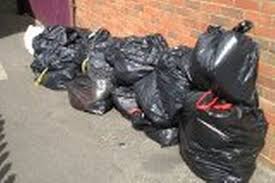
I am talking about those people who watch in silence as you move out of your property carrying black refuse bags.
They watch intently, because there might, just might, be something in the bag that could put food on their table.
I am talking about the group of people known as waste pickers.
Some regard them as scavengers – those who pounce on the refuse bags as soon as they leave your grip. They dig deep into the abyss of garbage, hoping, maybe praying, that something can be used as recyclable material.
In the beginning, I felt rather offended that someone would have the audacity to hunt through my refuse bags. And they would do it right under my nose! It felt like some or other strange invasion of privacy.
The feeling of being offended eventually made way for guilt. Yes, after a while I felt guilty that maybe I had not left anything in the black bag that could be salvaged for a penny or two.
At times, when I placed the refuse bags on the curbside I knew there was nothing of worth to salvage, and I would get this weird guilty feeling, as if I was a child who failed to put out some cookies or milk for when Father Christmas slid down the chimney.
Guilt, even though prevalent at times, has now made way for appreciation. These are people who are willing to dig through garbage to make a living!
I know, unemployment is rife in South Africa, and there are a lot of complaints about how tough it is is to make a living.
Yet, every Friday, I watch these people who have made a decision to tackle unemployment head-on, sucking it up to roam the streets in the early hours of the day, not minding getting their elbows dirty in our mess.
For me, such an effort should be applauded.
And you know what, this is certainly not longer a small-scale operation in this country, or in the rest of the world.
We might be shocked to learn that millions of people worldwide make a living collecting, sorting, recycling and selling materials that someone else has thrown away.
And they do not like to be called scavengers, or to be looked at in a strange way. This has become serious business.
There is growing recognition that waste pickers contribute to the local economy, to public health and safety, and to environmental sustainability.
What is sad is that they often face low social status, deplorable living and working conditions, and little support from local governments.
For interest’s sake, the term “waste picker” was adopted at the First World Conference of Waste Pickers in Bogota, Colombia, in 2008, to facilitate global networking.
Waste pickers basically collect household or commercial/industrial waste. They may collect from private waste bins on the curb or from dumpsters, along the streets and waterways or on municipal dumps and landfills.
Some rummage through garbage in search of necessities; others collect and sell recyclables to middlemen or businesses.
What waste pickers have in common is that they do this work to earn a livelihood, and often help to support their families.
Several years ago, it was estimated that 85 000 people in SA make a living as waste pickers.
Internationally, research reveals that around 15 million people in developing countries work as waste pickers.
Research by the Institute of Waste Management of South Africa reveals that the average South African waste picker can earn an income of up to R120 per day, with the potential of up to R4 000 a month.
As mentioned, even though they are doing a good job of helping us to recycle and to alleviate dumping sites, waste pickers are often marginalised by society and their work stigmatised as undignified.
So, next time you see a waste picker, consider the job they do, consider the sacrifice they make to survive and then consider how lucky you are not to have to dig through someone’s rubbish just to put bread on the table.