Power station crisis: Load shedding remains a real possibility
The risk of load shedding in particular between 6pm and 8pm remains a possibility for Monday evening.
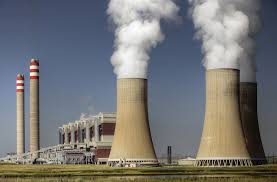

This is according to Eskom Chief Executive Tshediso Matona regarding the damage to the Majuba power station coal storage silo.
He said generation capacity at the station remains at 31 500 MW for the day, provided there is no further breakdowns.
“Demand forecast for evening peak s around 31 317 MW, which means possible load shedding.
“If the capacity is, however, still at the same level for the rest of the week, we would need to consider Stage 1 load shedding possibly on Thursday (whole day) or as early as Wednesday evening for four to six hours.”
“While the system was tight already, this unplanned incident exacerbated the situation so it is very likely that load shedding will continue for the week.”
“An investigation is already underway into the cause of the incident, but it appears that this is an isolated incident specific to the coal infrastructure at Majuba.
“Mobile coal feeders are on-site and the team is optimistic that they can maintain half of the total from the power station.
“Eskom has also informed all key stakeholders including the Department of Education and the national disaster management centre to minimise the impact for matriculants and all communities.
“We apologises to all electricity consumers but call on you yet again to switch off unnecessary lights, the geyser, pool pump and air-conditioning.
“Load shedding schedules are available on Eskom website, and municipal customers should contact their municipalities for details.
“We are painfully aware of the impact of this incident given the electricity supply situation in the country.”
Sequence of events
Regarding the sequence of events that led to the reported damage at one of the silos on November 1, Matona said all Majuba power station units were running normally by 12.30pm.
“Operating staff then reported a visible crack on silo 20. Immediately thereafter, all personnel working in the area were evacuated. By 1.12pm Silo 20 then collapsed but no injuries were reported.
“The area was secured and protected. Station output was immediately reduced from 3 600 MW to 1800 MW and currently running at 600 MW.
“Senior engineers and members of the Executive Committee immediately joined the Power Station manager on-site while Eskom triggered its Emergency Command Centre.
“First priority was to protect the power grid and look at the impact of power supply to the country. Arrangements were made for permits to transport mobile coal feeders to site to enable a manual feed of coal to five of the six units.
“This to ensure that the power station is able to operate at a minimum of half-load.”
History
The Majuba Power Station, situated in Mpumalanga, is 13 years old and became fully operational in 2001 when the last of its six units came on line.
Three 10 000 ton coal storage silos were constructed in 1994.
“The latest civil visual inspection was conducted in September 2013 by an external specialist, in line with best practice,” says Matona.
“At the time, the concrete structure was found to be in good condition. Some moderate cases of external physical damage that was reported has since been repaired. The risk classification was low.”
Outlook for summer
Regarding the outlook for the rest of summer, Matona says the system remains tight in summer, with different challenges due to the load profile.
“Unlike winter, where the demand increases significantly during the evening peak (5pm – 9pm), the demand profile during summer is much flatter with an increased demand profile throughout the day.
“This is because of a relatively high percentage of almost constant industrial load and the impact of air conditioning in the commercial and marginally in the residential sector during the day.
“The significant residential component over evening peak is not as evident in summer. If there is a constraint, the system is constrained all day.
“Summer is typically maintenance season, but this summer maintenance will increase based on the generation strategy as most of the maintenance is fixed and can’t be deferred.
“The challenge is to ensure that there is sufficient generation capacity throughout the day, as we continue with our maintenance plan and focus on reducing unplanned outages.
“The degree of tightness will depend on the performance of the plant and the level of unplanned maintenance (UCLF) as well as the available capacity.
“Eskom will not compromise its generation plant and will load shed if necessary to protect the power system from total collapse.”
For the load shedding schedule click on the following link: