Fact sheet: Ebola dangerous but not so devastating
The West African Ebola epidemic, the worst in the history of the disease, has focused international attention on sub-Saharan Africa in 2014 – and rightly so, given the virulence and rapid spread of the virus.

Yet other deaths in the region dwarf those of the virus.
This following fact sheet has been compiled by Africa Check, which is a non-profit organisation promoting accuracy in public debate and the media.
By World Health Organisation (WHO) figures, the Ebola epidemic in West Africa claimed 3,338 lives between the week of December 30, 2013 and the week of September 28, 2014.
Though the virulence and rapid spread of the Ebola virus are major causes of concern, it is important to understand the mortality figures in the broader sub-Saharan African context.
In 2012 – the most recent complete WHO figures for the World Bank sub-Saharan African region – about 9.6-million people died in the region, amounting to an average of 7.2-million deaths in 39 weeks.
Deaths in Africa in 2012 fell largely in the WHO Group 1 category (death through communicable diseases, and perinatal, maternal and nutritional causes): 5.9-million deaths amounting to 61.7 per cent of all deaths in sub-Saharan Africa.
Group 2 category (death as a result of non-communicable diseases), accounted for 2.7-million deaths or 28.6 per cent of all deaths. This category includes heart disease (293 000 deaths), various forms of cancer (426 000) and diabetes (175 000).
Group 3 category (deaths through injury), amounted to 939 000 deaths, or 9.8 per cent of the total. Group 3 causes of death include unintentional injuries, such as road accidents (207 000), and intentional injuries, such as inter-personal violence (132 000) and collective violence (14 000).
Non-communicable and lifestyle diseases are the top killers in high-income countries, accounting for 67.8 per cent of deaths in 2012. In contrast, many of the top killers in sub-Saharan Africa – lower respiratory tract infections, tuberculosis, diarrhoeal disease and malaria – are preventable and treatable, given adequate healthcare systems and resources.
According to the WHO’s figures, the five top killers in Africa in 2012 were HIV/AIDS, lower respiratory tract infections, diarrhoeal diseases, malaria, and strokes.
AIDS-related deaths
Though the number of deaths in the region due to AIDS-related illnesses was estimated have dropped by 22 per cent between 2001 and 2012, the number of deaths still amounted to a significant share of the world total: 70 per cent of global deaths.
In 2012, more than 1.1-million people were thought to have died from Aids-related illnesses in the region, an 11.5 per cent share of the regional tally. Disaggregated over 39 weeks, this amounted to 831 000 deaths.
In that year, roughly 25-million individuals in the region were living with HIV; about one in every 36 people.
The WHO’s Global Health Estimates are coded according to the International Classification of Diseases and Health Related Problems. This separates out tuberculosis deaths in HIV-positive and HIV-negative individuals.
Tuberculosis deaths in HIV-positive individuals are classified as Aids-related deaths, while in HIV-negative individuals such deaths are attributed to tuberculosis.
However, the figures do not paint an entirely accurate picture: particularly in countries where vital registration data – information on births, deaths, marriage and migration – are incomplete or inadequately recorded.
Deaths among HIV-positive individuals may be attributed to the contributing cause of death, such as tuberculosis, diarrhoeal diseases or lower respiratory tract infections, rather than the underlying cause (HIV/Aids).
Accuracy is further hampered as those issuing death certificates often do not know individuals’ HIV status, and the fact that many individuals simply do not get tested for the virus.
Lower respiratory tract infections
Lower respiratory tract infections are viral or bacterial infections that target the lower respiratory organs – the lungs and airways. Lower respiratory tract infections include pneumonia, influenza and bronchitis.
Pneumonia is a leading cause of death in children, accounting for 18 per cent of global deaths in children under the age of five, most of them in sub-Saharan Africa and South Asia.
In 2012, lower respiratory tract infections were the second highest cause of death in sub-Saharan Africa, accounting for just over 1-million or 11.5 per cent of deaths in the region. Spread over a 39-week period, the death toll would average at 826 000.
Though tuberculosis is among the lower respiratory tract infections, it is categorised separately in the WHO cause of death statistics. It accounted for 2.4 per cent of deaths (230 000) in sub-Saharan Africa in 2012. Pulmonary TB mostly attacks the lungs, but its extra-pulmonary variant affects other parts of the body, including the brain, spine and kidneys and bones.
Diarrhoeal disease
Diarrhoeal disease causes most global deaths in children under the age of five. According to the WHO, there are an estimated 1.7-million cases of diarrhoeal disease in the world each year, with 780 000 children dying from diarrhoea.
In sub-Saharan Africa, about 644 000 people died from diarrhoea in 2012, accounting for 6.7 per cent of deaths and amounting to an average of 483 000 over a 39-week period.
Diarrhoeal disease, generally caused by bacterial, viral or parasitic organisms, causes death through dehydration. Yet these deaths are preventable: according to the US Centers for Disease Control, 88 per cent of diarrhoeal deaths are the result of unsafe water and inadequate sanitation and hygiene.
Malaria
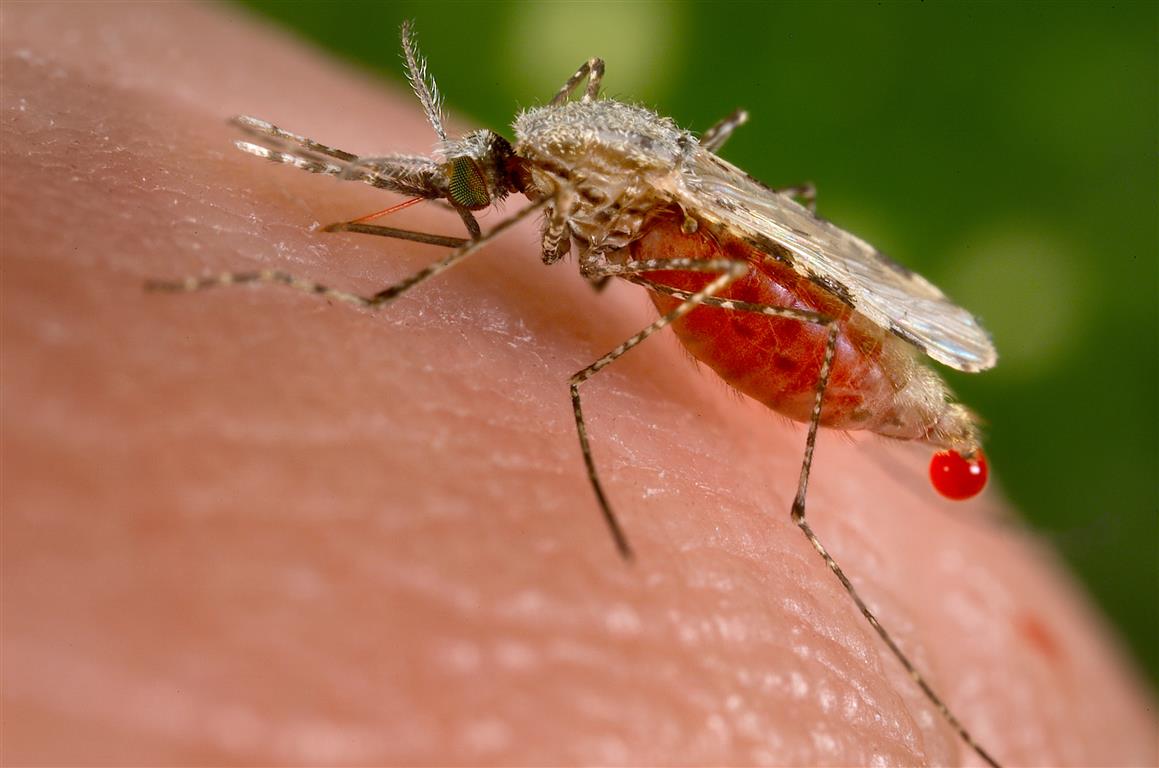
In 2012 malaria, a mosquito-transmitted, parasitic disease, killed 618 000 people around the globe – 568,000 or 92 per cent of them in sub-Saharan Africa.
The disease accounted for 5.9 per cent of deaths in sub-Saharan Africa. Averaged over 39 weeks, malaria killed roughly 426 000 people in sub-Saharan Africa in 2012.
Children are particularly vulnerable to malaria. In 2012, deaths in children under the age of five accounted for 41 per cent of malaria deaths in sub-Saharan Africa.
According to ONE, an international advocacy organisation targeting poverty and preventable diseases, six African countries account for nearly half of global malaria cases: Nigeria, Democratic Republic of the Congo, Tanzania, Uganda, Mozambique and Cote d’Ivoire.
An increase in malaria interventions – the provision of insect-repellent mosquito nets and indoor spraying with insecticides, for example – has seen the number of deaths in sub-Saharan Africa fall from 812 000 in 2000 to 56 ,000 in 2012.
Of 3.3-million lives saved through such interventions between 2000 and 2012, 3-million were of children under the age of five in Africa.
Stroke
Stroke is the second leading cause of death globally after coronary heart disease , accounting for 6.7-million deaths in 2012 – 427,000 or 6 per cent of these were in sub-Saharan Africa.
About 4.4 per cent of total deaths in sub-Saharan Africa were the result of stroke. Over a 39-week period, stroke would have accounted for an average 320 000 deaths in the region in 2012.
During a stroke, blood carrying oxygen is cut off from the brain, potentially leading to brain damage, disability or death. Family history, age, gender and race can be determining factors for stroke. Additional risk factors include obesity, diet, diabetes, smoking, hypertension and cholesterol.
Other leading causes of death in sub-Saharan Africa
After the five top killers in sub-Saharan Africa in 2012, leading causes of death were preterm birth complications (393 000), birth asphyxiation and trauma (356 000), malnutrition (307 000), coronary heart disease (293 000) and meningitis (260 000).
Ebola in context
In the 39 weeks that the WHO has tracked the Ebola outbreak in West Africa, 3 338 individuals died from the virus – an average of about 86 deaths a week.
HIV/Aids alone claimed an average of 21 000 lives each week in 2012.
Averaged over the same period, Africa’s five leading killers claimed about 74 000 lives, while the top 10 claimed 105 000.
In all, about 185 000 people died each week in that year.