Only standard Sanral rates advertised
The rates advertised on the Sanral boards along the highway are that of the standard toll tariff.
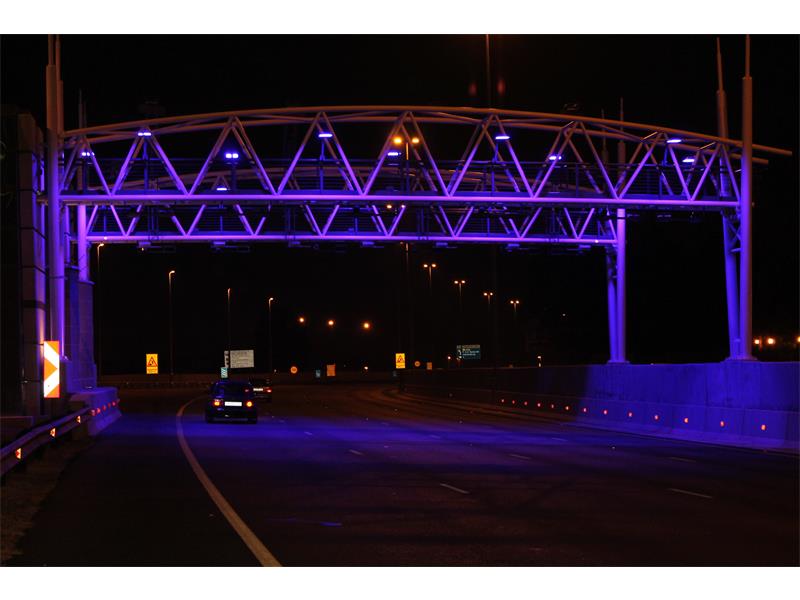

This is according to Vusi Mona, spokesperson for Sanral.
“These are the toll tariffs applicable to compliant users who pay within the seven-day grace period,” says Mona.
He adds that alternate tariffs are punitive and for non-compliant users and are, therefore, not displayed.
Mona says that the tariff is determined by the user type and the time within which it is paid.
“The alternate tariff, which is three times the standard rate, is applicable to road users who don’t pay within the seven day grace period.
“This is done as that compliant users don’t subsidise the non-compliant, as these users carry a higher administrative burden on the collection system.”
Dino Montepara, director at Malherbe Rigg and Ranwell Attorneys, says that according to Sanral, as seen in the table, the increase of the tariff is not due to interest incurred on the outstanding amount but rather a decrease in the discount granted to you.
“As seen in the table a person with an E-tag gets a discount of 48 per cent whereas as unregistered user would pay the full standard toll tariff.”
He says that the road user (registered or unregistered) has a seven-day grace period in which to pay, failing which they are liable for the full alternative fee, which is payable after 60 days.
However, if the road user settles the debt within 30 days they receive a 60 per cent discount and 30 per cent discount if it is settled between 30 and 60 days.
“The above concept is the same with any supplier that offers their creditors discount if they settle their debts within a specified period.
“It may be noted however, that the discounted transaction may be deemed to fall within the ambit of the National Credit Act of 2005 and Sanral, if properly challenged, may be required to comply with the National Credit Act.”
The Violations Processing Centre (VPC) is the debt collection division within Sanral, responsible for the collection and processing of overdue E-toll transactions and registered E-toll account holders.
“It is common practice for companies to recover their own debt without employing a debt collecting company or an Attorneys firm to collect their overdue debts.
“Should Sanral decide to institute legal action on any matter they may be required to employ the service of an attorney,” says Montepara.
He adds that there is no provision in the Sanral and National Roads Act that stipulates that Sanral is obligated to send road users an invoice with an outstanding amount.
“The section 50 of Promotion of Access to Information Act of 2000, gives persons a right to request any personal information from private bodies, including information regarding amounts due by such persons.
“This Act is relied on by many companies, who offer a credit facility, as a safeguard for debtors who say they have not received their invoice,” he says.
The Act urges debtors to contact the creditor to see what amount is outstanding.
“Therefore, it is our suggestion that in order to avail yourself to the discounts in terms of the legislation as it currently stands, that users proactively follow up with regards to outstanding accounts in order to make payments within the provided time,” Montepara adds.