E-tolls must be debated by provincial legislatures
In the light of recent revelations about Sanral’s grand plans to extend E-tolling to all national roads in the country, Outa calls on all provincial legislatures to insist on their right to debate the Transport and Related Matters Amendment Bill.
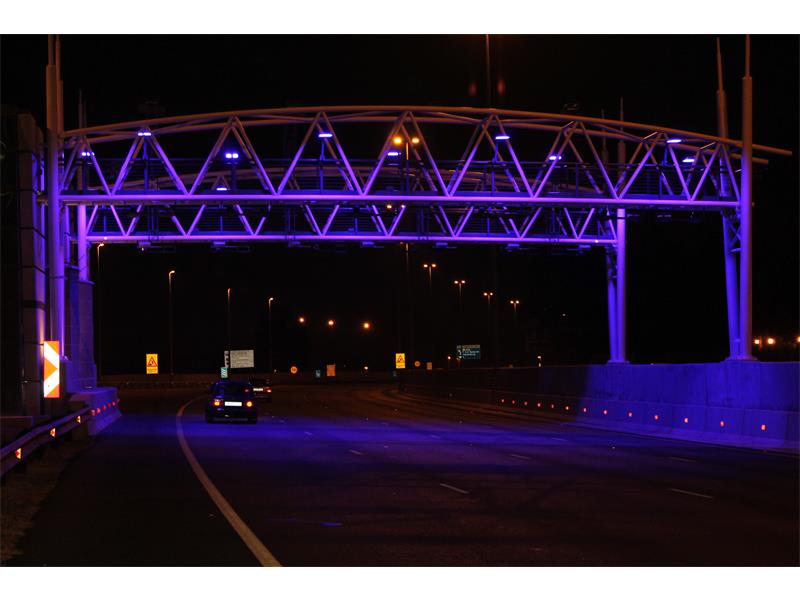

According to John Clarke, spokesperson for Outa, there can be no argument against the fact that an E-toll system introduced within the confines of any urban area will have a considerable impact on road congestion, maintenance and other pertinent matters at a provincial level.
The DA argued in the Cape High Court on March 4, that it was unconstitutional for legislation to be have been confined to debate only in the National Assembly.
Outa has recently learned that the E-toll Operations Centre at Midrand was designed and built as the “largest storage array in the southern hemisphere” capable of processing information, from gantries erected all over the country covering thousands of kilometres, which is the ultimate plan for the centre, if indeed Sanral is allowed to get its way.
This is all the more reason that entitles provincial legislatures to have a say on the matter.
Clarke, who has been monitoring Sanral’s ambitions in Kwa-Zulu Natal, the Eastern Cape and Western Cape for the past decade, says he now understands why Nazir Alli has been lobbying so hard to also push the N2 Wild Coast Toll Road and Western Cape Winelands Tolling schemes.
“Initially I found it strange that in the midst of the Gauteng E-tolling crisis Alli was popping up in remote rural villages in the Eastern Cape to try and co-opt support for local communities and traditional leaders for the ambitious and wasteful R11-billion N2 Wild Coast freeway scheme.
“The Midrand E-toll Ops Centre is the nerve centre for a much-larger ambition, and it would appear that Sanral has been suffering delusions of grandeur,” says Clarke.
He adds that consequently the E-tolling scheme in Gauteng has been fraught with risks and untested assumptions that ought to have been openly assessed with all stakeholders.
He adds that apart from the Kwa-Zulu Natal legislature’s unanimous opposition to Sanral’s plans to extend E-tolling to that province, the City of Cape Town has already secured a High Court interdict to halt Sanral’s plans to introduce E-tolling of the N2 and N1 routes into Cape Town.
Outa believes that had the Kwa-Zulu Natal and Western Cape legislatures democratically debated the so-called “E-toll bill”, it could very well have been halted by provincial party structures.
“There is far more at stake than the fortunes of political parties and the counting of votes. Democracy is about the casting of votes and the creation of opportunities for participatory democracy to take root.
“Sanral undermined the democratic values of the constitution when they failed to conduct a public participation process before the Gauteng freeways were declared as toll roads in 2007/8.
“To bypass provincial legislatures is to show similar contempt for the public interest and the constitutional rights of South African citizens,” says Clarke.