Ocsober to test one’s resolve
The month of October is going to be hell for some if the South African National Council on Alcoholism and Drug Dependence (Sanca) has its way.

If you have missed the news, it is Ocsober month, and for those who have already had too many to drink by the time they read this article, to pronounce ‘Ocsober’ will already be a tough challenge.
These days, awareness is being raised about something or other literally every day, it seems.
Many of these awareness campaigns cause one to frown regarding their legitimacy, but highlighting alcohol abuse has its merits.
After all, alcohol abuse has been cited as one of the factors when it comes to road accidents and domestic violence.
The nationwide campaign was first launched in Australia, but has now hit our shores like a man falling off his bar stool after having too many tequilas.
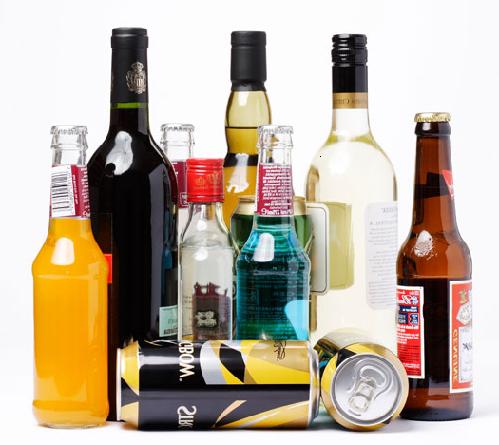
Ocsober is asking South Africans to quit drinking for the month, as part of a campaign to raise awareness about alcohol abuse.
The message is simple – if one struggles to stay away from a drink for at least three weeks, then there might be a problem.
And we are not talking about accidentally sipping the communion wine during church service, but about knowing if you have the nagging urge to down one or two drinks.
Ocsober is a good test for anyone and everyone to see if staying sober is possible, or if it is an insane concept.
In this country alcohol flows as freely as our e-toll money will flow into some or other Austrian company’s bank account.
South Africa is a hard-drinking country, even though alcohol abuse, like soaring fuel prices, is a global phenomenon.
It has been estimated that the per capita consumption of alcohol in South Africa is between 10.3 and 12.4 litres (some even estimate this to be 20), with the higher level reflecting the amount including homebrewed alcohol.
According to a World Health Organization (WHO) report, released in 2011, South Africa’s consumption is among the highest per capita consumption rates in the world, and it’s continuing to rise.
Naturally, Ocsober will also get its disapproval, and not because the concept hails from Australia.
Many will say that they are responsible drinkers, but we also know that denial is the first danger sign when it comes to substance abuse.
Alcohol is part and parcel of SA’s social life. Imagine having the whole nation going sober when the Springboks are being clobbered by the All Blacks.
The emphasis is, thus, not on zero drinking, but on responsible drinking.
It is about being responsible when driving on the road (which is generally applicable and not just when it comes to alcohol use), it is about being responsible with your family, and it is being responsible regarding your actions towards your fellow man.
Ocsober will serve as a barometer for those who will take on the challenge to ascertain if there is a problem.
There are many reasons these days why teenagers are indulging in one too many – for example, peer pressure and dysfunctional family life – but the message should remain clear that any form of substance abuse is not cool, but only destructive.
When you are a teenager, you think everyone is wrong, especially those who are much older in years and experience, but the reality is that substance abuse is a monster that leaves few survivors in the long run.
And, while the country remains mindful of the dangers of abuse, Ocsober is, thus, a good time to be mindful of the fact that many women and children are abused by someone who is intoxicated.
It is also interesting that Ocsober comes at the same time that the government is looking to lower the blood alcohol level of a driver drop to 0.02g/100ml.
Dropping the level will, unfortunately, not achieve much, but rather show a resurgence in moral values and norms.
The simple fact remains: there is nothing constructive or beautiful when it comes to alcohol abuse – it leaves scars in many shapes and forms that time will not always heal.
Excessive amounts of alcohol can have adverse effects on physical, mental and social health. – See more at: https://www.digitalpathology.uct.ac.za/topics/urbanization/alcoholsm.html#sthash.pupHcl2t.dpuf